Monday, January 25, 2010

Wanted:The Review

I am surprised to find that most reviewers have dismissed Wanted as an action masala belonging to the golden era of the eighties – Rajesh Khanna, Dharmendra, Jeetendra in their prime, dancing, beating people to pulp and weeping over raped sisters even before the usher has pointed your designated deathchairs with his steel torch. The movie starts with the sound of gunshots and blood splattering on the screen, the hero makes his entry in a basement warehouse reminiscent of Big B’s Deewar sequence and beats them in a fashion jo maanav kalpana se pare hai, unfunny spoofs crowd upon each other, the chief comedian’s punchline is his obese physique and his hilariously impossible desire for the heroine (who carries more weight on her front than the comedian on his entire frame) and one of the gags involves the shlokas – “Teri ma ki choobeep, teri ma ka bhonbeep”.

Honestly, does this sound to you anyway like a cheap masala flick? It’s obvious that the critics have missed the heavy symbolism hidden in the folds, as manifold as the folds on Ayesha’s love handle.


The movie starts in the fashion of a Bhansali period drama: a woman kick boxing sequence with roaring East Asians around and a Bihari Don (a bloated Abhishek Bachchan) watching the proceedings. The don is the character Dawood has based his life on and is now on his way back to Mumbai. A brief sequence follows the narrative of Company then: a Mohanlalesque honest cop arriving in Mumbailand with the resolve of cleaning it of its filth – the Shahid Kapoors and Dino Moreas– but is advised to start small and then told about the evil Bihari migrant workers who threaten to take the cake from the mouths of the Manoos who just by virtue of being born in a place now deserve to have them all and eat them too, even though if others have baked it. Montages from Company are quickly shown to refresh our memories.

The cop immediately pulls away a lowly officer from his duty patrolling the waters outside Gateway of India to the task of protecting Mumbai from a greater threat than a bunch of strafing terrorists – Bihari workers. For that purpose, the hero has been given a double O to take out any Bihari eking out a living. He hangs around with a bunch of peons at Churchgate, Andheri stations, taxi stands staring stiffly ahead all the time but with excellent peripheral vision. Immediately, the cop lays a trap to encounter a bunch of workers who have just landed at Virar and induces them into an abandoned PSU factory, with showering sparks and molten metal but abandoned by the striking workers, with that old North India weakness – supari.


Now, the run-up to this introductory sequence is MCed by the head peon, a puffy Indra Kumar who once, along with Armaan Kohli, defined the rank bottom of Indian hero type, with Abe, woh Rambo ka baap hai, Terminator ka chacha hai, Rocky ka dadu hai, Bruce Lee ka nana hai, Last Action Hero hai woh!And then surprise o’ surprise, emerges from the shadows not Tusshaar Kappor but Raj. Not the Malhotra one, but the Nunnu Thackrey, played by Salman, the inspiration evident in the announcement by the faux rappers: “Super Killer Demented, Momma says he’s Wanted!" Raj then proceeds to stamp his “Immigration Denied” seal on the poor bunch of workers in the manner of South Indian Action flicks.

Tired from a day’s work here, he steps outside to get some fresh air where about a thousand Manoos wait to garland him and do what they used to do in the workless halcyon days – taking out Ganpatis and dancing on the roads to synchronised PT steps – before the migrants came and made their gaan fatis. [A note here: Watching Prabhu Deva and Govinda dance together was a history-being-made moment only a diehard masala fan can understand.]

And then he goes back to lolling around the stations waiting for the next batch of the desperate migrants masquerading as the mafia, and Prabhuji keeps spewing truckloads of them every time Raj disposes of a battalion of them while filing his nails. And that is every fifteen minutes into the movie.


Enter Uddhav, played by who else but Mahesh Manjrekar as a corrupt cop, who remains surprisingly restrained and hence just a million decibels over the top. Uddhav is in the same business as Raj – killing Biharis at random – and indeed their territories, and constituencies, might have never overlapped had not the case of the Bihari baloonwaali fallen in both their laps.


Now the gubbarewali was not always a gubbarewali. As the brilliant transcripts accompanying my CD suggest here, she started as a weatherman (sorry – weatherperson) who gets thrown out of her TV show because of her excellent English. Forced to rely on her wits, an impossible task on any day, she becomes a vendor of balloons but does not know enough of Marathi to get a license to sell her wares and has to carry them around under her clothes while pretending to work in a BPO. Indeed, the balloons become twin symbols for her ethnic and sexist stereotyping. In a scene when trapped in a hot lift (full of delicate romantic moments reminiscent of Mere Mehboob like when the heroine sits between the hero’s crotch and asks what is vibrating and he answers – my cell phone) the hero blows air in her mouth and just as he asks her to blow him in her turn, the doors of the lift part.


A lot of critics have unfairly panned Ayesha’s role saying her presence in the movie is as good as a chair with two cushions. I disagree on two counts. First, a doormat would be a better home furnished example. Second, the symbolism embodied in her character is difficult to understand for the unsubtle. Branded for her English, gender and ethnicity, the heroine carries the painful burden of this hate on her chest courageously; her immense onus suggested only in delicately framed shots like these.

You might say that Ayesha is the script of the movie. Had it not been for her the movie would have been endless streams of Bihari workers, deprived of their rakhwala trapped in the Big Boss house, massacred at the station by Raj and Uddhav.The introduction of Ayesha introduces the very dilemma Ralph Fiennes faced as a concentration camp officer in Schindler’s list – the temptation of the gubbares of someone you have been taught to blindly hate.


In all, Ayesha propels the movie with four scenes along.


1. First, she goes to an aerobic run by Vinod Khanna to pretend that the only secret to her bloated top is a fine fitness regimen and no balloons.

While returning she runs into and gets groped by Uddhav or some Bihari goons (In fact, Uddhav is so desparate that he even threatens to rape the heroine’s lighter-by-quintals mother! – another definite first in Hindi cinema)

2. Second, she summons Raj through her irritating and fat Maggi brother with a mobile


3. Raj turns up and stamps his double OOs

4. Fourth, when Salman turns to her and wants to move to the other O with her, she weeps copiously and engages in philosophical dialogues with him like here where she questions the preconditions of affection thus, “Jisse bas logon ki jaan lena aataa hai, woh kisee ki feelings ko kya samjhega!” All Raj can do is look desperately bored and checking her balloons with his amazing peripheral vision and wishing she was peddling grapes and he could just walk away.


These four scenes run endlessly in a loop and indeed threaten to do so forever till, fortuitously, two things happen. Vinod Khanna dies and the gym closes. And then, Raj kills all the Biharis, and even Uddhav, who could have molested the heroine. And the picture ends thus abruptly – a bare-chested Raj (I seriously thought that after a decade I might be able to survive a Salman flick with seeing his shaved nipples but no – the villains had to throw Molotov cocktails at his shirt) heaving over the corpse of Uddhav and staring at the camera and realising it is over. The End flashes.


Ali G - Economics

I must be watching this AliG video for the nth time. Might as well share it.


Sunday, January 24, 2010

Back from Jaipur Festival

When I woke up at five yesterday morning, with dense fog gathered outside my window, for a moment, I almost gave up my plans to catch the early morning Shatabdi to Jaipur. After all, while people spend a third half of their life sleeping, my own is nearer to half. It took all my will-power, and a persistent alarm from the mobile I sleepily groped for in vain, to get up and slip my feet in the slippers.

I am glad I did.

The Jaipur literature trip is the most fascinating trip I have taken in recent times. Like sholay, all the elements clicked in place. Well, almost. A surreal one-hour wait at the Gurgaon station which reminded me of my engineering days, a comfortable train-ride alongside Faiz, a cheap and decent hotel, Sudha, Andy, me and Faiz – in that order – managing to fit our bottom curves into the back of an auto to the Diggi palace, and the festival. So what if the first day discussions fell short of our expectations a tad bit. The second day more than made for it – and the real winner was really what Al Pacino would call the vaataavaran and Murali Manohar Joshi the ambience. People milling with books in hands, some of them having even read portions of it, authors and wannabes mixing without pretensions, eavesdropping on conversations like (“I am writing my own ‘On the Road’”), art students, girls as pretty as the Jaipur spring after the Delhi winter, people from every possible country, the gliteratti (that is, the bullshitters), the literati – some of them credible, seeing the faces of some of the bloggers I have cursorily followed, good bouli-narrative fusion filled evening, and booze.

I attened about half a dozen discussions ranging from most enjoyable (thank you Vikram Chandra, Maya, William Dalrymple, Roddy Doyle, Ayaan Hirsi) to a ridiculously pathetic quartet.

With this I pass the baton of descriptions to Faiz as he promised he would blog, though in a confession (where I exempted him from kneeling in front of me as I find men kneeling in front of other men a little bothersome) he told me that he finds descriptions of ambience tiring in books. Faiz, write and I will paste the content here with proper references.


I would rather post random thoughts for now.


Why are school girls so damn annoying, now that I am out of that age where they made me tongue-tied? I would any day prefer the “Man, this is so bullshit!” shuffling discomfort of adolescent boys to the shrill vacuity of girls. Roaming around in hordes, shrieking at celebrities (one of them who spotted Shabana Azmi, sister of Shabana Admi, came shrieking to her friends so horribly that I thought she was parodying her own kind and so grinningly turned, to find a shocking earnestness in her face) and oh! that twangy accent. As a bunch of them crowded around Om Puri, I almost prayed for him to turn into Shrek and yell at them Woaahhhh!

Chetan Bhagat sucks on stage. I am in no position to comment on what he sucks on backstage. Read this hilarious article(second of the two) that sums up totally Faiz's and my experience of his session.

All said and done, anyone who has managed to get a book published needs to be applauded. It is a tremendous soul-wrenching effort. More than the discussions, I scanned the faces in the audience and believed saw the determination in many to write a book of their own. After all, it is the latest fad. Many a time, we delude ourselves that we can better the person under the lens without actually lifting a finger. The thought of the action becomes the action itself and we assume that there is all to it – the thought. The execution a mere minor formality. At least, I have. That is why, so late in life, a respect for achievement has grown grudgingly in me. No more was the difference more apparent than the stage. Many of the authors did not meet the standards I had imagined for the festival, but still they were there, a couple of feet over the audience and a microphone thrust in their hand, because they had earned that privilege. I was left thinking that writing a novel (I can’t comment on other forms) is a journey which can only get its meaning when it reaches its destination. If it doesn’t, the years, the effort, are reduced to a nothing, a meaninglessness. Perhaps there is a purification that happens, an ennobling of the self - but right now, I do not buy that.

Wednesday, January 13, 2010

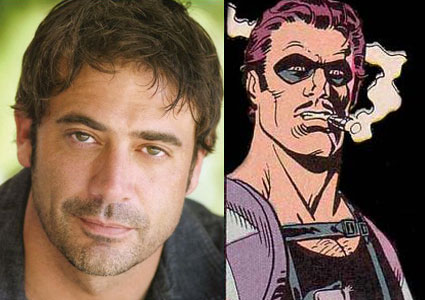
Separated at birth?


The Voyeurs

Left alone, I pick another drink from a passing bearer and wander along the walls. I pause in front of a portrait, an old woman beggar crouching beneath a lamp-post, hugging herself so fiercely that it must be really cold there, when I suddenly sense her at my elbow. ‘Tch, I wonder why people here find this beautiful’, she sighs.

I try to remain silent for some time; to not take the bite. I take long sips of whatever it is.

‘Because it is not our reality. We can see it, taste it but escape it any time we want. With a blink.’

She looks at me with a half open mouth, the tongue rolled to one side and pressed against the rim of the champagne glass tipping against her cheek, the palm of the other hand cradling the elbow of the arm raising the glass. She smiles and takes a sip. ‘Someone just told me it’s the pain which makes it beautiful.’

‘The horrible.’

‘The horrible?’, she enunciates slowly.

‘Yes. The horrible. The biting cold, the hunger pang. We think it’s beautiful because its pain has the keen sting of beauty and is nothing like our lumpy misery. If you ask that woman, once she has a warm house and a meal, she would prefer a poster of fat white babies with cotton-puff cheeks coochy-coo on the walls. She thinks that’s the reality which belongs here. But we don’t call it art here. We call it kitsch. No provenance, you see. And its joy, its melodrama is so so crude. So whole.’

Her mask slips for a moment and she blinks and frowns: she’s buzzed too. ‘So you think this is not art?’

‘Oh this is art. You know what Baudelaire called art? Prostitution. She’s the whore and the artist the pimp.’

‘Then that makes us the clients’, she bends her head a little forward in mock conspiracy.

‘No’, I slowly bend mine and whisper as I look askance at Ajay, ‘he’s the client. We are just voyeurs.’

‘Are you sure?’, her forehead tips against mine and her incisors flash white. ‘Or are you that whore’s secret lover who can’t bear to see her fucked like this?’

Tuesday, January 12, 2010

3 Idiots Review


The answer, I hear, Hirani gave a 44 year old Aamir when asked why he was being cast as a 18 something was that Hirani could not imagine someone else. (Much like the directors in the 80s couldn't imagine anyone else other than a Jeetendra or a Rajesh Khanna to play a college heartthrob.)

Well, Hirani. That is why we have a process called casting. And a thing called thinking afresh – something your movie touches in words but not deeds.

3 Idiots is not about 3 idiots, it’s about The Idiot. Not the Dostoveosky one, not the Bhagat one, but Aamir Khan. The King has been toppled. Aamir is the new crowned king of Bollywood without a doubt. Nothing but him can explain the BO numbers he’s generated with Ghajini and the undermarketed Taare Zameen Par (Mangal Pandey doesn't count as the implosive effect of AmishaHamPatel can offset fifty explosive Khans); nothing can explain why even after a mega-successful run Hirani felt insecure enough to rely on this real ikka of Bollywood.

Aamir is an excellent actor. He is the only big Khan who doesn’t ham and hence he is an excellent actor. I like Aamir. He knows he is not as good as people make him out to be and he tries hard – and honesty of intent is a worthy attribute in a hollow industry like BW.


Coming to the Idiot. The film takes off from where all movies like these have taken from since DCH. Only this time instead of another Khan to steal the idiot’s limelight, the two Chunnu-Munnus from RDB are added. There might have been the Tunnu but he was rolled into the character of Munnu himself, the Muslim-un’-like-us Madhavan. That way another painful subplot is avoided when all that the character has to do is weave his life around the leelaayein of Rancho and drop his mouth to his chest in awe, grin and shake his head at another of his antic-cum–miracles and weep and give him butt salutes now and then (a ceremony only Kareena is exempted from). Sharman Joshi tries bravely to eke out something for himself but Madhavan, clearly on the fag end of his hero career in BW, doesn't even try. They don’t even get a token side-heroine to romance. What happens to the Isha Koppikars and Amrita Raos when you need them?

To complete Prabhu Khan’s dasavtaram, there’s even a sequence in a song reminiscent of DCH’s Saif and Sonali’s song (btw, the music is pretty sad in the Idiot), where Aamir does a news anchor, chef, Hanuman, astrologer on the boob tube in front of another boob, Kareena. And no – it was not an ad by Coca Cola. And he becomes the only junior in the history of Indian ragging to get away with electrocuting a senior in the gonads. (By the way, the senior is played by a noted actor from Bangalore theater scene – Rajeev Ravindranathan. How pitifully these actors get wasted by BWood!)

And the new Jadoo ki Jhappi, from previous instalments, is All IZZ Well – stated with more emphatic thumps atop bus roofs by the real Prabhu Deva a decade and half ago as Take it easy policy.


Oh, don’t mistake me. The movie is entertaining. And I disagree with many when I say that the second half is better than the first. The subplot of Javed Jaffrey is deftly handled to explain Rancho’s decade long absence and still get something out of it. The movie is neatly, if unimaginatively, directed and the script is crisp despite the loopholes. What really make the movie work are Irani and Chatur. Aamir, never a spontaneous actor, is so busy trying to decide on the next cutesy mannerism to impersonate a 20 year old – blinking, craning his neck forward, scratching his head, look over that spot over the fulminating father's shoulder, sticking his hands deep in his pocket, wide-eyed – that he looks like he’s dividing pi with e in his head.


A pause here to establish my own credentials on why I might be able to connect to the lives portrayed.

  1. The protagonists as Madhavan mentions were born around the year 1978. At least, he was. Ahem.
  2. The movie is supposed to be life in the campus of an engineering institute I went to. Though not the Delhi one.
  3. The movie is shot in my other campus – the MBA one.

Yes, my emotions might have colored my judgement had I found an inkling of my own life in the life described in the movies. But the kind director rarely let that awkward situation arise and beside Boman, nothing else in the movie – except for its moments like Sharmaan’s “per plate cost” question, two typical engineering students touching themselves under the vest as they browse Hindi cheapies on exam eve, students again praying to every possible god and animal on the eve of the results – touched me as strongly resembling my life in engineering and I quickly adapted myself to enjoy just some other fantasy ride. Which I did.


Where I did have a problem was when the film drawls its messages at me.


In what I would suppose it supposed a key scene, Aamir tells the professor about how ‘Yehaan par koi naye ideas ki baat hi nahi karta… baat karte hain to sirf marks ki…’

Oh yeah? And what new ideas have you offered to press that point? Recycling done to death urban legends, jokes and clichés.

Aamir asks the prof boasting about a pen built my Americans for space, why they could not just use pencils. Actually, the done-to-death urban legend is about Americans spending billions in research for the elusive pen while the Russians took pencils aboard.

How is a funeral filmed? A Christian cemetery, rains, black umbrellas.(For this only the dead character was a Lobo; beside the point that he died waiting for his convocation while the rest of his batchmates were waiting for the results of their first semester.)

Sharman, when told that nothing is impossible, presses the paste out of a tube and asks Maddy to try and put it back.

And having a 44 year old portray a teen never had anything to do with the BO marks scored right?


Yes. The movie truly stumbles where it tries to get serious. Suicides are thrown in like rapes in a Ranjeet movie. There is that obligatory suicide due to pressure that all half baked college movies and books resort to as a dramatic device to suddenly turn the mood from flippant to serious. When a nanha idiot is asked to make a choice between getting rusticated or turn a witness, he gets a nayaa idea and jumps out of the window. (‘But not a snitch!’ – as Pacino would have thundered here.) The prof’s own son had committed one, his bawling daughter tells him – like we did not see that coming since his introductory passage. Curiously, there is only one man behind all these suicides – Boman Irani who remains impervious to his Axe effect, even ignorant. When he breaks down, it’s only when the hero saves the day for his daughter - much like in his previous avatars in the Munna Bhai series. New ideas indeed.

Boman Irani’s character is a caricature – and credit to the man to bring it out in living flesh and blood. He’s the only totally credible piece to the movie and I could very well picture him stumbling into a class in Kanpur. The finest performance. I have studied for four years from professors like him and I can attest that 9 out of 10 of them would go behind the whiteboard and push it rather than pull it from the front. It is details like these that make Boman’s genius all the more special. Unlike the movie, he alone tries to be plausible not to the general but the people whose lives they portray.

Other than him, the movie remains mostly indifferent to what life in an engineering college in North India ten years ago might have been. Mobiles ring galore, people sport hairdos and fashion of the last few years, the GPA system is discarded in favour of a mysterious department-independent ranking system, a college of considerable stature is run autocratically by a single professor who cuts into classes at will, and a climax is resolved via a laptop to laptop live streaming delivery. And Kareena steps into a male engineering hostel in the dead of the night and steps out alive.

And there lies the movie’s biggest fault. Its lack of empathy – to a time, a context, a class. A reality away from colleges where the DCH cast hangs around. Times when most Indians still did not have the choice of doing whatever they wanted to do with their lives (and still don’t). The film shows no understanding of the deeper constitutions of its subjects: an engineering student, genius, a topper, a professor, a system. It’s no surprise therefore that the film’s second half does better than its first because now the protagonists are driving a SUV in picturesque valley, much like the DCH gang en route to Goa, and have brushed off the dust and lint of their humble bothersome and alien contexts from their classless metrosexual suits.

Other than that, the Idiot works just fine. (I would not have labored over its faults if it had not tried to preach.)

Tho’ I have never rested easy since I saw how suddenly my past from ten years back can land up at the door in a helmet – and a red wedding-sari.

Thursday, January 07, 2010

A very bad idea

I have been sent an invite to join the community for a book whose description runs thus:

He could've had everything. If only he had said 'Thank you'.

In September, the month when IITians do distinctly Non-IITian things, Samar was having the time of his life. With Rock shows, JAM sessions, debates and politics, his life resembled a colorful graffiti. Adding chaos to this randomness were his three partners-in-crime, Pranav, Skimpy and Jiya. Together they made sure that life was impossibly wild and barely legal.

Things hit a crescendo when Samar found himself as the front runner in the race for the head of the student body at IIT. And that is when the tide began to turn, in a way Samar could have never imagined. A casual ambition threatened to come true, and threw at Samar dilemmas which would stump any IITian with a pair of glasses.
Dilemmas which required skills not taught in any classroom, including the secret art of disaster management.


I can't wait for this one to come out.

My room from first year MBA


Been five years since I saw it.


Jiggly post

Abhishek Bachchan, I just learnt, calls John Abraham, jiggly poo.

So the next time you're sitting on the commode and earthquake comes, stare between your legs at the half length of poo jiggling in mid air, and imagine this is what the tiny B sees in John.